Showing posts with label Religious. Show all posts

Monday, October 30, 2006

Viewing Genevieve's Poems in a Literary and Historical Context

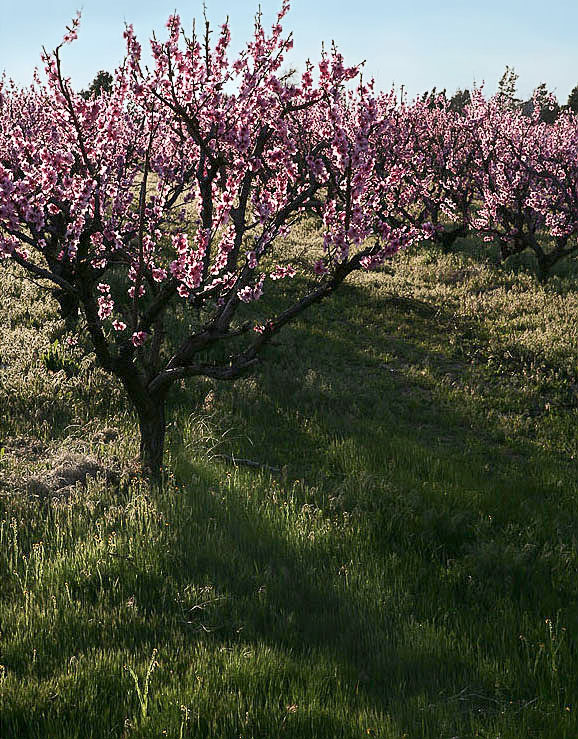
Poetry presents a spirit-voice that orders reality around it. The poet both apprehends reality as it is and projects his or her own inner state onto the external world. In her poems, mom weaves, tucks and tufts her mind into images of the world around her. She presents situations that reveal the inner beauty and essence of things, as, for example, in The Mystery of Spring when she writes of a tree coming alive again in May after a long cold winter on the harsh Minnesota prairie:

Its arms to the dancing blue and its eyes to snow-capped heights,
And toes deep clinging to the prairie soil,
It grew—a radiant Peach Tree—in tender tones singing
The mystery of spring, the beauty of love,
‘Til everyone could know,
The joy of a peach tree aglow.


Through her poems mom expresses her relationship with herself and her world, a relationship of intuitive creativeness, where her poetry serves as both a vehicle for bonding and communicating and as a device to protect. She can hide her true feelings in poems, conceal her thoughts in images neatly arranged to stand on their own—stand even as they have in her case silent on scraps of paper for over 80 years!

The American poet, Marianne Moore, said, “Poetry provides a place for the genuine…creates imaginary gardens with toads in them.” In general, mom’s poems present two general outlooks: the devotional sentiments of her Catholic faith and the creative free-wheeling imagination of her poetic spirit. Although mom’s poems were written just after WWI, during the wild, rebellious jazz age of the Roaring 20s, through the Great Depression years, and during and after WWII—a period when many prominent British and American poets were expressing uncertainty over a cold tension-filled universe bereft of order, design and purpose—mom maintained an unwavering faith and optimism in God and the natural order of things. If she felt any doubts or ambivalence, it was only about the decisions of human leadership, particularly political and military leaders who were too willing to send our nation’s—or any nation’s—young off to war, as expressed in Mark Ye, Men of War and Political Fame and Between Two Fronts.

For her there is always a logical structure and explanation to things. She expressed and reinforced this belief through the themes, structure, diction, settings and imagery of her poems. These are not the expressions of someone whose soul is wracked by doubt and anxiety and who is now drifting without purpose or destination, as many young restless writers her generation—called “the lost generation”—became when they gathered in Paris after World War I in a desperate search for a fun and a faith to believe in. F. Scott Fitzgerald, author of The Great Gatsby, was one of these restless souls. So was Ernest Hemingway, who wrote about them in his first novel, The Sun Also Rises. Rather, mom’s poems are the statements of someone very clear about who she is, where she is and where she is going. Raphael, Gifts of a Woman and Song of Life are just three of several poems that articulate her clear sense of identity, place and direction.

Mom’s poetic spirit was akin to that of Emily Dickinson's, a 19th century poet who lived in solitude and wrote lyrically of love, nature, death and eternity, and whose works weren’t published until after her death and Robert Frost, America’s most popular poet of the 20th century. Frost found inspiration in the ordinary things around him—the landscape, a stone wall, paths in the woods, a snowy evening, a farmhouse—and regarded poetry as something that” begins in delight and ends in wisdom—is a momentary stay against confusion.” Though Frost’s style of poetry reflected the romantic style of the1800’s, whose themes depicted man and nature living in harmony with each, his actual themes depicted more of a split between man and nature. Nature’s meanings and secrets remained mysteries to man, so serenity was achieved, not in understanding nature’s secrets but in simply appreciating them and toiling productively and usefully amid the external forces of nature. To Frost, we are sustained and nourished by “significant toil.” Mom’s poem, Be Strong, captures this work ethic:

We are not here to play, to dream, to drift.
We have hard work to do and loads to
lift.


Like Frost, mom highlighted her relationship with ordinary things. Her poetry advocates an active life over the passive and suggests the tenacity necessary for victory over life’s struggles, a tenacity equal to the iron grip of a honeysuckle tendril. It conveys an attitude of someone in complete touch with her environment, complete absorption in the moment, and complete acceptance and enjoyment of the absolute. It presents an affirmation of life’s mystery and beauty, and not an attempt to understand it. Again in The Mystery of Spring, she captures this Frost-type element:

Still, no one knew from a mere glimpse of this tree
What sort of friend it might someday be.


Though mom knew struggle from her years growing up on the farm and raising a family through the depression, the dominant feeling of her poetry is optimism and appreciation for life and the life potential of nature. She saw images and heard sounds of beauty all around her, as expressed in these lines from Sunset:

Warm downy clouds aglow with light,
Above and beyond green lacy trees
Ever shading from greys to purplish –pink to white…
The chirp, chirp of a bird/
And a dark flash ‘gainst the sky
The crying laughter of children
In the yard nearby…

Mom’s response to nature was visceral and spiritual. Her poems about nature, like her devotional poems, were expressions of faith in the purpose and design of the universe, of a belief that God guides all living things—man and birds alike, flowers, trees and the ebb and flow of the sea. Her belief was not a blind, mindless one, but a philosophical questioning and wondering, a philosophy of being part of the earth, one based on the premise that nature is truth. If she had a wish to escape or retreat, it was to this aspect of nature, and not simply to be free of suffering and pain. For mom a visit to the sea is a return to our origins. We leave our troubles behind, are comforted and awed by sea life, regain on the dunes and the edge of the surf our true perspective. This was the attitude behind her spending days upon days with us at the beach: keeping herself and her sons and daughters connected to their place in the universe. She knew the practical value of a day at the beach, too. After romping all day in the sand and surf, we ate well when we got home and slept well at night!

For mom as for many poets, the physical world corresponds to the inner world. Her life is bound with the life of nature. As a child growing up on a farm, it is natural for her to feel the mighty power behind life’s shifting scenes and mysteries….the ebbing and flowing, waxing and waning, being born and dying. Her poetry is marked by the language of yearly decay and the yearly renewal of life. If she felt inner turmoil and restlessness at night, she expressed this mood through the image of shrouded red beacons of lights passing through the pulled curtains from the distant shore, as in her poem Perspective:
Through the darkened curtains of night,
Two red beacons of the air,
On the distant shore,
Keep their lonely vigil with my fingers,
While I “tune in” with God
.

Mom believed in the larger and enduring unity behind the specifics of life and death. For her, death is the point at which we pass into the eternal spring, the eternal now, the world of infinite life and eternal affirmation and splendor. It is a return to the source of all beauty. Her poetry, however, is not just serious or prayerful or political. There is a light and playful side, too, perhaps the natural Irish wit and humor, the twinkle in the eye, that we all enjoyed along side her sense of devotion and discipline. This playful, free spirit is captured most beautifully in the poem, The Little Knife:

I’m a powerful thing,” said the Little Knife.
“How is that?” asked the Oak’s jealous wife.
“While others must sing and dance for their life,
I just cut and cut,” said the Little Knife.

“You silly thing!” sang the tree so tall.
“How could powerful be such a thing so small?
You’re not strong or big like me,
Nor up in the winds and always free.
You can’t wave your arms or bend your knees.
You can’t dance with the wind whenever you please!
What a powerful thing, indeed!” laughed the tall tree’s wife.
“You’ll know when I cut!” warned the Little knife
.

This poem moves on, logically, lyrically, delightfully to a fitting end. It provides in combination with the poems below a rare glimpse into a perspective that bridges and transcends nearly forty years.

Since most of mom’s poems were undated and written on fragments of paper, it is impossible to place them into an exact time frame. Collectively, however, they provide an inspiring view of the spirit of a remarkable person who, in the midst of keeping step with the events of her time, moving from house to house and city to city, and raising nine children, found a way to create, over the years, maybe one day between kitchen chores or one evening after the children were asleep, “a momentary stay against confusion.” In putting down her thoughts neatly into words and rhymes and sentences and lines, mom ordered her world. She found in that order reflections of the love and beauty and peace and purpose that already existed deep within her, and all around her, from her days as a child on the prairie in Minnesota in the early 1900s to her very last days in California in 1997, where, alongside a rose garden, beneath a towering eucalyptus grove, amidst the vast and beautiful and fertile fields and orchards of California’s Central Valley, in the shadows of the spectacular High Sierras—where giant Sequoias really do “dance with the wind” whenever they please—mom passed into her Eternal Spring, returned to the Source of All Beauty.

Sunday, October 29, 2006

Song of Life

Dearest forever, I’d give my life away,
I’d ask you never, for e’en one little day,
Yours just to do with as you pleased,
Yours til the life in it has ceased,
For I trust you in everything you do.
My strength—I’d give you all I have,
My heart for only you would beat,
And all my prayers be your retreat,
For all my love then to atone,
For I trust you in everything I do.
(Early 1920s)

This undated poem was typed with a stanza format, internal and line- ending rhyming, plus two conventional poetic word usages, (“e’en” for even, “til” for until), that makes me think mom wrote it while she was a student studying poetry (or music, since she called it “Song of Life”). Its theme is the classic “Bride of Christ” theme, expressing the total commitment and trust and devotion to Christ, to be and live as He, the Son of God, would want her to be and live. This attitude reflects her devout Irish Catholicism. Regardless of when she composed it, she never wavered from this attitude of devotion, but seemed rather to grow stronger in it as the trial and tribultaions wore on. For mom, spiritualty infused and surrounded everything we did. It emanated from nature itself. It seemed to me, as a child growing up under her wings, that it was in the natural order of things that mom found reinforcement for her faith. Her attention to the events of nature--the sun rising and setting, the seasons coming and going, plants springing up each spring, the phases of the moon each month--these were all aspects of God's power and love for man. Our task was to respect and trust in His power and love and to return these through our everday actions. She offered everything up to God, living out as well as anyone I've every known the words of Saint Benedict, "To work is to pray." Her very life was a song of praise written for the glory and honor of God. All who met and knew her seemed to sense this humble yet powerful and radiant nature of her personality.

Saturday, October 28, 2006

Be Strong

We are not here to play, to dream, to drift.
We have hard work to do and loads to lift.
Shun not the struggle.
Face it. ‘Tis God’s gift.
(Early 1920s)


Mom scrawled this on the inside of the back flap of her composition notebook from Loretta Heights College in Denver, where she was studying to be a nurse. Eventually, she left her studies to return home to the farm in Heron Lake to help her family, becoming a teacher in a local school. The little poem captures her philosophy of working hard, not complaining, seeing every struggle as an opportunity given by God, bestowed on us by Him, to carry out His will. All her life, through every household move, every child pushing inexorably toward his or her own independence and suffering inevitable setbacks and disappointments, she never wavered from this attitude.

Once when I was trying to tuck her into bed a couple of years before she died (about 70 years after this poem was written!), I was trying to get her into the middle of the bed so she would be more comfortable and not roll off. She was kind of stiff-bodied then and hard to move. It was a struggle. I got her head on the pillow but, lying on her side on the edge of the bed, she looked like she was uncomfortable and might easily role off. I was worried and asked, “Are you comfortable, Mom?” She answered, with that Irish chuckle of hers, ”I didn’t know that was the goal.”

That was a profound moment of insight for me and an object lesson in life. In an instant I got the point: embrace what is, accept it and go on…in this case, discomfort and to sleep. “Face it.” Of course, I was at that time in the middle of having to face horrific personal struggles of my own, but the lesson was there, right before my eyes. Mom was strong, stoic, accepting, uncomplaining, never shunning the struggles given to her. There it all was, lying like a lump under the covers, a spent and wracked 92 year old body, long past trying to be comfortable, just happy now to have a warm place to rest her head, and a son to tuck her in. “Good night, Mom,” I said. “I love you.” “Good night,” she said, her voice barely audible. “I love you, too.”

I walked out of her room that night, shutting the door behind me, tears welling up inside, thinking how lucky I was to be around a mother so strong, so loving, so accepting, so much at peace with herself. I was 50 years old then and living with her in the Fedora Street house in Fresno. Within a year or so I had to face the decision, with the help of the family, to put her into a 24-hour care residential facility. That was, ultimately, one of the five or six most difficult struggles of my life. I searched around for months. Found one close by, but it was eventually unacceptable to us. We looked so more, lways struggling against ourselves, until we finally got an interview with the highly regarded Armenian home. She had to interview for this “position,” not being Armenian and not having any money or inside connection. Once I realized she was going to be interviewed, I knew inside that we were in luck: How could anyone not want to take care of her once they meet her? I thought. I was right with this feeling. They accepted her on the spot!

“Be strong.” Good advice, but to feel it deep down in your bones, all the way to your toes, that takes years and years of practice. She had it…the strength…and I was still just learning about it.

Friday, October 27, 2006

Dreams of a Blind Man


I strayed away one summer day
from the land of bustle and noise.
My thoughts?
They wandered far away to play

with their dreamy toys.
The shore was cool, but the sun was bright;
I felt the day and thought not of night.
My dreams! How they sparkled in rainbow hues,
And brightly danced in grays and blues.
And colors sublime? I saw them, too.
I know ‘twas so.
But now…now …Where did they go?
‘Tis dark! ‘Tis dark again at night,
The dark without a ray of light.
The green of the trees, the blue of the skies,
Have gone with my dreams.
To Paradise?
Ah, Yes! I’m sure! I’m sure ‘tis so!
And now I pray through everyday
that I again to them may sometime go.
(1922)


Here mom shows her knack for escaping into her rich imagination and enjoying, at least for a moment, its “rainbow hues” and brightly dancing “colors sublime.” She is the dreamer, the “blind man,” speaking in the masculine voice, and I can’t help thinking that, though she never stops or stopped believing in her dreams, there were moments of melancholy, moments she kept to herself, when she wondered, “Where did they go?” In those moments, her faith kicks in and she realizes that all dreams end in “Paradise.”

This is not only a sample of her early sophisticated poetic skills (she was 17 in 1922) but it is a profound statement of her faith. WWI had been over only a few years. A wave of cynicism had been sweeping the country and the world because of the vast devastation in lives and the disillusionment in institutions. The Roaring ‘20s were just beginning as an escape from the war. Mom shows her deep sense of optimism here, of coming out of the dark and, eventually, into the light of paradise. In literary circles, there is a tradition of blind poets (for example, Homer and Milton) who are inspired by their suffering and who also espouse the sanctity of nature. Mom alludes to that here, at least unconsciously, indicating she had studied or been aware of this tradition. After WWI, there was a general sense of tragedy lingering in the consciousness of people, but poets often asserted the idea, as mom does here, that even within tragedy the life that is nature (and super-nature, i.e., “Paradise”) will reassert itself. As a foot note: In 1990 my sister Julie’s daughter, Jennifer, was studying Helen Keller. Jen memorized this poem and recited it for her class.

I remember when we first took mom to St. Agnes Hospital in Fresno after her first major stroke. It was sometime in the early 1990’s, I think, about 80 years after this poem was written. She began hallucinating in her room because of her medication. She told me to “get the spiders” off the wall across from her bed and to “turn the water off’ on the faucets which were also on the wall. At first I was frightened and tried to reason with her, bring her back to reality, then I realized that for her, she was in her own reality. To her, the spiders and running water really existed! So I entered into her world, her “belief system,” went over to the wall and pretended to wipe off the spiders with some Kleenex and turn off the water faucets. She felt better then, even smiled. I didn’t feel like a professional entering the mind of a patient, which is a technique I teach to students, but like a child believing with his mom that this is what’s going on, this is reality, this is the way things are. I was prepared, conditioned all my life for this moment!

Throughout her life, mom maintained her sanity by moving in and out of her imagination at will, crossing back and forth between the actual and the imagined as if they both exited on one plane. Working about the kitchen or the living room, she talked incessantly to herself. She lived in overlapping realities. This poem is an early indication of the deep structure of her faith and her imagination. She was healthy that way, though most of us could only follow her for a little while into the rich and colorful world of her dreams and visions and imaginations. Most of us did not have that deep spiritual infrastructure. Maybe we were more spiritually “frail,” which is why we so idealized her and regarded her as a “saint.” In our experience, she was one, though we hardly understood how deep her spirituality really was. Few of us could truly follow her there though we are grateful to have her as our model of strength and character.

Tuesday, October 24, 2006

God of My Heart

Oh, God of my heart,
Give me strength and the power to live,
Lend me love and kindness others to give,
And with Thy children so far apart,
Bless them today, Oh God of my heart.
(Late 1920s
)

This was penciled as is next to the poem Rapheal. It is a little prayer, a simple expression of mom’s faith, asking for strength, love and kindness, so that she may be able to give these to others, and asking God’s blessing on all children who were “so far apart.”

Monday, October 23, 2006

Bondage

Whirling, swirling
Into the lives of men,
Brick on brick, plaster on steal
Girded and crowded and held—
Bonded are we!
God of my heart
Give me strength to fight

to the freedom somewhere,
Give me strength to withstand
This clutching and jolting,

to breathe without choking,
This murky stifling air.
(1920s)


This poem was typed without any corrections on 61/2” by 81/2” notepad paper, which makes me think it was written while she was a student in the early 1920s, either in Denver or St. Paul/Minneapolis, where there must have been much construction going on. In a revision entered into her composition book in ink and dated 1928, she changed the last three lines to: Give me breath to withstand/This clutching and jostling/Give me Light! Either way, I imagine the poem originally reflected a moment when she missed the clean country air and open skies of the prairie back home. The image of the suffocating steel-girded, polluted urban industrial city is presented carefully and then, centered in the middle of this image, a prayer to God for strength to endure. The line “Give me strength to fight to the freedom somewhere” is ambiguous, for it is not clear to me what freedom she’s referring to (Woman’s rights? Suffragettes? Child labor?) or where exactly she wants to carry out her fight. Since mom was always keenly interested in social issues and saved newspaper clippings regarding subjects of interest to her, I can imagine her thoughts here being aimed at social injustices and her request to God to give her the continued strength to carry on the fight against them. Not knowing the exact date of this writing, we can only guess at the historical context. But the theme clearly echoes an attitude mom held all her life: fight, with God’s help, to improve social conditions.

Sunday, October 22, 2006

Builders


To help someone?
Is that our aim in life?
To help another find his peace

and brave his daily strive?
To find the kinks which others make,
And smooth the paths which they must take,
And just help along with a singing song—
Could that my mission be?
Perhaps ‘tis so…
To walk beside a Builder,
yet not the Builder be.
Tis thus, then I shall gladly go.
(1927)

Mom wrote this in her college composition book at Loretta Heights. It shows the young adult’s searching for clues to there own identity and direction. Here she weighs the purpose of her life as being that of a helper, perhaps even help by cheering up “with a singing song.” I’m guessing the word” Builder,” since it is capitalized, refers to God, the Creator and Maker, and her wish is to “walk beside” him in her journey through life. As Leretta Heights College is in Denver, I'm sure she sought inspiration and guidance about her future through the natural beauties surrounding her in the mountains of Colorado, as well as through prayer and her trust in the "Builder" of all things, including mountain streams, waterfalls and our own pathway to the future.

Tuesday, October 17, 2006

Sunset

Warm downy clouds aglow with light,
Above and beyond green lacy trees,
Ever shading from greys to purplish –pink to white, Announce now the approach of night.
The chirp, chirp of a bird,
And a dark flash ‘gainst the sky,
The crying laughter of children
In the yard nearby,
Herald nighttime’s nigh.
Oh! Warm by your hearth,
Ye tiller of soil.
Gather your fond ones, large and small,
Rich in their blessings at the light of day,
Shaded in peace and mist:
Let them now feel their day.
(1928)

Mom was always connected to her environment, aware of the season’s changes, the phases of the moon, the shifting of the clouds in the sky, the sounds around her….birds, children, people talking… and she always appreciated these all as parts of the larger design, the larger blessing of life. This poem was written in the spring, May 1928.

Thursday, October 12, 2006

Between Two Fronts

Abroad awaits the cry:
“The Second Front is opening—Stand by!”
At home, already two fronts we stand between—
The front of today and the front of tomorrow.
Our perspective must be clear-cut and keen.
When the detonation of Pearl Harbor blasted millions of ears
And closed the senseless front of yesterday,
Like empty urns along the curb we passed them by,
Those beautiful babies of yesterday.
Battered and smudgy and hardy they grew,
Like empty urns now they gathered rust
With every wind that blew—Protection they never knew
Push or be pushed—survival now—
Instinctive nature’s cry.
It’s God’s world and no man lives for himself alone.
God’s spirit must survive.
We’re duty-bound to serve our Father’s will.
The curtain rises on the Lost God of this Tragedy of the Age.

1941

What strikes me most about this statement is its deep anger and sense of senseless tragedy. It is a fragmented grouping of ideas, probably written just after the bombing of Pearl Harbor, December 7, 1941. There is no attempt to revise or re-order it. I imagine mom wrote it down to express her strong opposition to war as a way of dealing with conflict, seeing it as a clear violation of acting in accordance with God’s plan. Everything was measured against the backdrop of her religious faith. I’m sure she knew, too, the U.S.’s long-standing official policy of trying to stay out of the war, though that policy was becoming increasingly untenable as Japan continued its march across Asia and "a second front was opening."

Ironically, this poem has some inner chaos in it, reflecting the chaos on the ground and ships during the bombing of Pearl Harbor. Technically, I don’t think mom meant it to come out that way. However, this bit of fragmented thought must reflect her fragmented feelings at the time, being so close to the Navy personnel through the USO at Newport Naval Station. That had to be a shocking time for everyone, especially there in Newport which was so dominated by Navy families. Dad, too, as Director of the USO, had to be very worried, for he was close to so many of the officers and sailors stationed at the base. The “battered babies of yesterday” were the 2,300 soldiers, sailors and civilians killed at Pearl Harbor, as well as the tens of thousands of soldiers and civilians that had already been killed in the war up to that point. Also, I imagine she had in the back of her mind the thought of her own five sons: that someday they, too, might have to go to war. She had lived through WWI and knew the costs in human lives: 37 million casualties, military and civilian (15 million dead, 22 million wounded) and was now seeing America enter another major conflagration. Her phrase, “This Tragedy of the Age” echoes President Roosevelt’s words about Pearl Harbor: “This is a day that will live in infamy!”
Before it was over after the dropping of the bombs on Hiroshima and Nagasaki, WW II would prove the deadliest war in history: 66 million deaths worlwide, including 37 million civilians and 22 million military. One can almost hear her sense of these numbers, which she couldn't have known yet at the time of Pearl Harbor, the shocking senselessness of them, in her final line: "The curtain rises on the Lost God of this Tragedy of the Age!" When I think of the "less deadly" (to dare to use such a phrase) conflicts that followed (Korea, 54,000 dead, 103,00 wounded; Vietnam, 58,800 dead, 128,00 wounded; and now Iraq, 2,842 dead, 21,077 wounded, all U.S. military personnel only, not counting the millions of other military and civilian casualties), I can only imagine the horror mom (and all mothers) must have felt, knowing the nation was about to crank up its military operations and send over a million of its sons and daughters into combat. Over 350,000 women served in the military during WW II.

I was born a year after Pearl Harbor, but I do remember hearing mom express her opposition to war as a mean to resolve international conflicts during the Korean war, when my oldest brother Mike entered the army, and throughout the Vietnam War, especially when I went off to boot camp in 1966. I remembered from my studies in English literature a statement of the British writer, G. K. Chesterton, that seemed to echo mom's sentiments about speaking out against war even as we are waging it and going forth to fight in it: "A man who says that no patriot should attack the war until it is over...is saying no good son should warn his mother of a cliff until she has fallen." I knew her to be a solid patriot as well as a thoughtful person. Afterall, one of her heroes was Eleanor Roosevelt! She knew of the cliffs that lay ahead, for both her and her sons and daughters. As I left home for boot camp, not knowing whether or not I'd be sent to combat in Vietnam, I saw a tear in my mom's eye as well and a look of sheer strength and resignation, a smile even, of pride, hope and encouragment. It was this look, this look of strength and faith in the face of the unknown, that I carried with me and still carry today, have recalled in times of my own turmoil and drawn strength from for forty years now. In it I have come to understand the multiple meanings of mom's words: "...no man lives for himself alone." (On the left is a picture of mom helping me collect seashells on Newport Beach. This was 1944, a year before WW II ended. I was two years old.)

Wednesday, October 11, 2006

Juvenile Delinquency

How can we face our Juvenile Delinquents with a steady eye,
We who so blindly passed them by?
How can we condemn their parents and their spirit,
When we forced their pride to die?
With Patience we must labor to undo,
In Charity we must Faith instill anew!
(1940s)

This statement was scratched in pencil on a small USO note, probably in the early 1940s. It shows mom’s compassionate liberal social point of view, which sees juvenile problems as the result of a systemic failure of the adult establishment to heed the early warning signs in childhood. It calls for an attitude of patience and charity, versus judgment and punishment, for the rehabilitation of youth who’ve gone astray. Mom maintained and espoused this attitude throughout her life.

Tuesday, October 10, 2006

Please, God!

Please, God, help us find our way back.
We’re lost in the noisy city streets.
Maybe You forgot about Dopey:
He’s dashing about whither and thither!
We don’t dare let him out alone.
He needs wind and weather,
You know—that’s all his own!
He won’t grow on what he eats,
So many things to see and do,
He scarcely sits one meal through.
It isn’t much to ask for Dopey—
One spring and summer by the sea
To crunch along the drifting sands of Manchester Where everything’s so clear and free.
We never could take him to the flinging sands of Rivere.
He sure be trampled in the crowds
Stampeding in a Lachemere.
Sneezy’s voice is low and hoarse.
Happy doesn’t mind, of course
And Grumpy and I know what it’s like
to be shoved and pushed andjostled about,
And Bashful, too.
We can shout our way out!
But Dopey—we never know what he will do!
God, can’t You see your way through?
(1940s)


I’m not sure who “Dopey” is here. Could it be her, or one of the children? This was written on a scrap of paper in ink. Several words scratched out, redone. It shows her constant communication (prayer life) with God, as well as her love of words, her playful spirit, and, as always, her sensitive lyrical poetic frame of mind. It is in this poem that we see what most people never saw in mom, her very versatile, articulate, artistic, verbally skillful mental flexibility. She had such a rich inner life, very much like Emily Dickenson, the famous American poet who hardly ever left her house, that she didn’t need much outside stimulation. She could keep herself entertained for hours on end, days upon days, in her own kitchen, talking and whispering and singing to herself, so rich was her mind.

Thursday, October 05, 2006

My Soul Shall Be Serene in the Blessing of the Mourn

Hour after hour,
through torment and searing pain,
God of Calvary, help me to endure,
That I might know, Oh Master,

your dignity in pain.
Oh, God,
If once again I walk into the dawn,
My soul shall be serene in the blessing of the mourn.
(1940s)

This poem was penciled onto a scrape of paper, probably in the 1940s. It is an elegant prayer reflecting, perhaps, a low point for mom and her turning to God for the strength to deal with life’s hour-to-hour, day-to-day struggle. Her life became increasingly stressful with each additional child and each new move. I can imagine her feeling overwhelmed at times were it not for her faith, which allowed her to face each day with strength, serenity and gratitude: “If once again I walk into the dawn/My soul shall be serene in the blessing of the mourn.”

Wednesday, October 04, 2006

Perspective

Beyond my narrow window lies a world of things,
Beginning with this tree which gives my soul its wings:

From deep within the silent sod
The sun has drawn its hidden life to God.
(While the usually noisy street still sleeps,
The majesty of early dawn
Quietly rustles through her green leaves.)
Through the darkened curtains of night,
Two red beacons of the air,
On the distant shore,
Keep their lonely vigil with my fingers,
While I “tune in” with God.
Though root-bound to home and homely chores
My hands and feet may be,
My soul now soars with God eternally.
(June 1945)

This poem is another prayer. It was written while we were living in the housing project in Newport. Mom had eight children then. Mom had eight children at the time, ranging in age from 3 to 14. She wasn’t yet pregnant with Julie. I can imagine, then, that she looked out her window often, both before going to sleep at night and on awaking in the morning, and in this looking-out put her life in perspective. She did this every day that I can remember…pull open the curtains, look out the window, connect with the stars, the moon, the night, the sun, the clouds, the blue sky, the trees, the birds, etc. It was her way of being part of life, of connecting to life outside the home, and of being connected to the larger Creation of God’s world. It was this perspective that kept her going, helped her transcend on a daily basis the feeling of being “root-bound to home and homely chores.” It was, in her own words, how her soul “soared eternally” everyday. This prayerful existence went on right before our eyes, unpretentiously, subtle, imperceptible. We considered her “saintly,’ but our understanding barely scratched the truth of her deeply spiritual inner world, so connected was she to God and His Creation: “this tree which gives my soul its wings.”

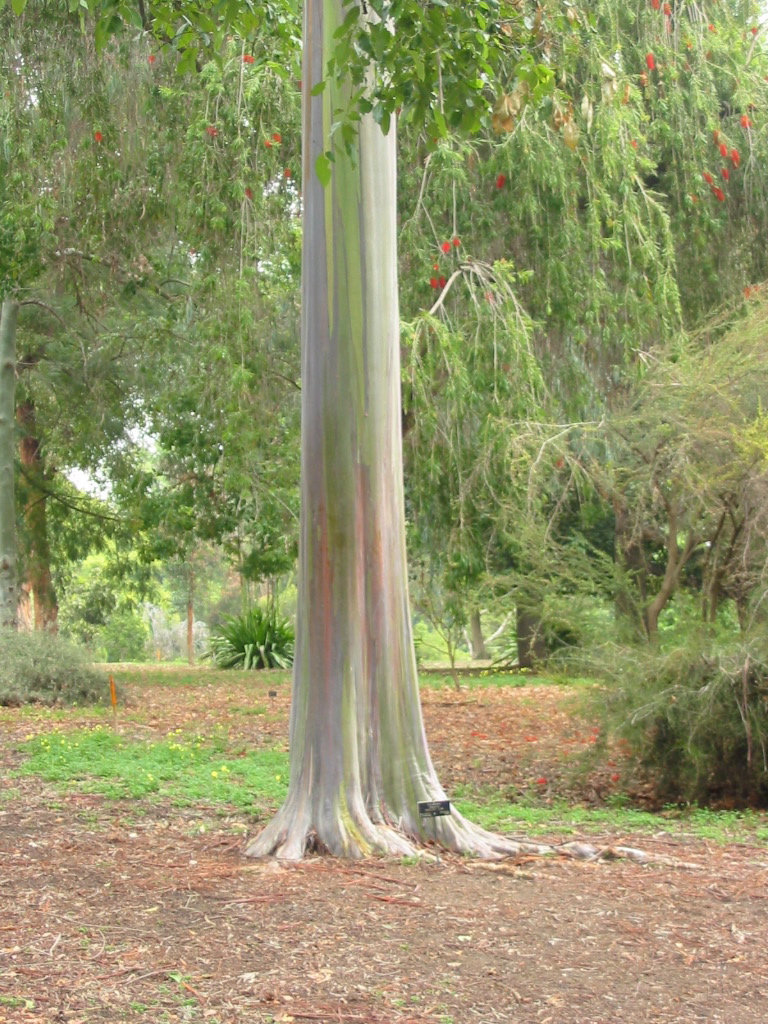
In the Armenian Home, when mom finally got her bed by the window looking out over the lemon and eucalyptus trees and open fields near the orange orchard, I felt so much at peace, finally, with myself, knowing we couldn’t ask for anything more at this time, that the Hand of God had intervened, in her final days, to give her what she most loved and needed…that window out onto His World. It was there each morning, and throughout the day, that she connected to the tree (Nature) and through it felt drawn to God:”From deep within the silent sod the sun has drawn its hidden life to God.” Mom was the tree and the bird and the lemon—was one with all these, a part of the natural order.

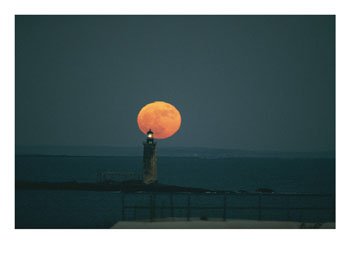
I like mom’s reference in this poem to the “two red beacons of the air on the distant shore.” I guess that these might be lighthouse beacons guiding the ships at night, and that, as she “tuned in” with God by moving her fingers through her rosary, she connected to the sense of guidance these beacons symbolized, guidance she sought through prayer. This is another example of how sensitive her mind was. As she did with the beacons in the night, she could turn nearly anything into a part of her relationship with God: “Keep their lonely vigil with my fingers.”

The word “perspective” is an abstraction. It never enters the poem. Instead, the imagery carries the thought. The window, of course, is an obvious metaphor. Though it may be “narrow,” a narrow window, even a slight crack in the door, a simple ray of light, a mere shadow showing through a curtain, the quiet rustling of leaves, is enough to awaken the poetry of the creative mind. Abstraction here is expressed in the concrete, displaying the force of mom’s poetic imagination. Philosophically, Mom understood that if we could just get a little bit outside ourselves, we could go the distance, transcend self— “Beyond my narrow window lies a world of things”—which is why she encouraged us to work hard, do our homework and chores, use our talents and skills, care about others, plant trees and flowers, say our prayers and stay close to one another. Being self-centered and closed-minded was unacceptable. Being open to the world and embracing life and others was the ideal. Throughout her poems mom expresses a sense of both social and spiritual consciousness.

Tuesday, October 03, 2006

Hands of a Woman

Hands of a woman,
your finest tools may be,
To serve, to mold, to cherish,
God’s humanity.
Heart of a woman, beat with loyalty,
With love and sympathy,
To fire the sparks of life for God’s eternity.
Soul of a woman, radiate sorrow,
With courage and faith,
To lift above today, God’s tomorrow
(1945)


Judging by the way this poem was first scribbled January 2, 1945, in pencil on the back of a tattered envelope, mom jotted this poem down quickly. She crossed through three words and blotted out four lines, then later revised it and entered it into her notebook in ink on June 8. This is a clear statement of her sense of her own feminine identity and her role in God’s eyes. She sees herself, all women, as having been given gifts “to lift above today God’s tomorrow,” that is, to use for God’s ends, not her own. Her view of her hands as “tools” to shape God’s humanity, her heart as a source of warmth, loyalty and nurturing, and her soul as a source of courage and radiance to light the way, gives three powerful positive images of her sense of who she is, who all women are all over the planet, and what her and their purpose in life is.

I don’t think she ever veered from this center point of her existence, for even on the day before she died, as Asako and I sat with her in the afternoon sun, in the rose garden of the Armenian home in Fresno, she looked up and saw a bird flying against the blue sky far above the eucalyptus trees waving in the wind and grabbed my hand. She fixed her eyes on mine and squeezed my hand tight in the way she did when she wanted to get your attention and teach you something. She was predictable that way. You knew she was in her “molding" mood. She then spoke of the bird as a messenger from God watching over her, as she had several times, saying the bird had followed her from our backyard on Fedora Street and perched often on the branches outside her window looking in on her. She lived this poem out, literally, her soul always radiating, lighting, lifting, brightening, never burdening or weighing heavy on anyone at anytime. This poem is her philosophy of life.

Sunday, October 01, 2006

Insignificant as a Grain of Sand

How glibly we chatter on of the old and the new,
With laws antiquated, pray tell, as 1852!
But what’s a hundred years

to the ocean or the sky?
Or the God who made you? Or I,
Who feel as insignificant

as a grain of sand,
And knows well His Law rules both

the sea and the land?
Now where would we be

with the tide rushing on,
If not held by the Law of Command?
His Only Son suffered for all,
And raised woman above the earth,
Freed by Love from the passions of man.
This 20th Century on the edge of space—
Mary, protect us from Eternal Disgrace!
(1950s)


This poem was written in red ballpoint pen ink on a small torn scrap of paper, with just two word changes scratched in. Since it mentions the year 1852 and “a hundred years,” it was probably written in 1952 in Columbus, GA. It conveys mom’s strong opinionated side regarding frivolous talk and human political and military arrogance. I can only guess here, but I know that later in life, she was a strong advocate of woman’s rights, which may be the idea hinted at in the lines: “…raised woman above earth, Freed by Love (Jesus’ sacrifice) from the passions of man.” The Korean Conflict was occurred the early 1950s and there was much talk of the space race between Russia and the U.S. Mom kept abreast of the news and had (and voiced!) opinions on current events, especially wasteful and destructive ones! She contrasts the natural law (Law of Command) and eternal power of God (the sea, the sky, the rushing tide) with the feeble and insignificant efforts of man to reach out into space. She is scolding our leaders, charging them with hubris (the Greek term for pride and arrogance, which tragically brought down all grasping kings and leaders), and asking the Mother of God to intervene on our behalf to keep our leaders from falling into this age-old habit of folly and arrogance.