Showing posts with label Nature. Show all posts

Monday, October 30, 2006

Viewing Genevieve's Poems in a Literary and Historical Context

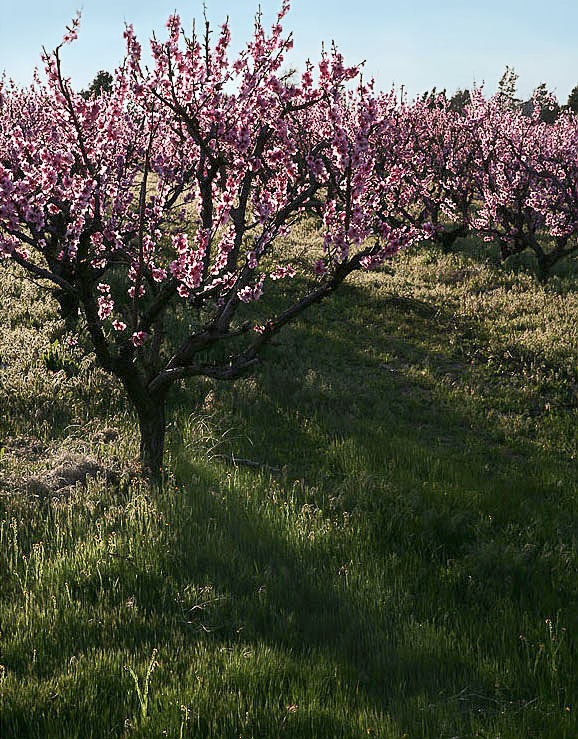
Poetry presents a spirit-voice that orders reality around it. The poet both apprehends reality as it is and projects his or her own inner state onto the external world. In her poems, mom weaves, tucks and tufts her mind into images of the world around her. She presents situations that reveal the inner beauty and essence of things, as, for example, in The Mystery of Spring when she writes of a tree coming alive again in May after a long cold winter on the harsh Minnesota prairie:

Its arms to the dancing blue and its eyes to snow-capped heights,
And toes deep clinging to the prairie soil,
It grew—a radiant Peach Tree—in tender tones singing
The mystery of spring, the beauty of love,
‘Til everyone could know,
The joy of a peach tree aglow.


Through her poems mom expresses her relationship with herself and her world, a relationship of intuitive creativeness, where her poetry serves as both a vehicle for bonding and communicating and as a device to protect. She can hide her true feelings in poems, conceal her thoughts in images neatly arranged to stand on their own—stand even as they have in her case silent on scraps of paper for over 80 years!

The American poet, Marianne Moore, said, “Poetry provides a place for the genuine…creates imaginary gardens with toads in them.” In general, mom’s poems present two general outlooks: the devotional sentiments of her Catholic faith and the creative free-wheeling imagination of her poetic spirit. Although mom’s poems were written just after WWI, during the wild, rebellious jazz age of the Roaring 20s, through the Great Depression years, and during and after WWII—a period when many prominent British and American poets were expressing uncertainty over a cold tension-filled universe bereft of order, design and purpose—mom maintained an unwavering faith and optimism in God and the natural order of things. If she felt any doubts or ambivalence, it was only about the decisions of human leadership, particularly political and military leaders who were too willing to send our nation’s—or any nation’s—young off to war, as expressed in Mark Ye, Men of War and Political Fame and Between Two Fronts.

For her there is always a logical structure and explanation to things. She expressed and reinforced this belief through the themes, structure, diction, settings and imagery of her poems. These are not the expressions of someone whose soul is wracked by doubt and anxiety and who is now drifting without purpose or destination, as many young restless writers her generation—called “the lost generation”—became when they gathered in Paris after World War I in a desperate search for a fun and a faith to believe in. F. Scott Fitzgerald, author of The Great Gatsby, was one of these restless souls. So was Ernest Hemingway, who wrote about them in his first novel, The Sun Also Rises. Rather, mom’s poems are the statements of someone very clear about who she is, where she is and where she is going. Raphael, Gifts of a Woman and Song of Life are just three of several poems that articulate her clear sense of identity, place and direction.

Mom’s poetic spirit was akin to that of Emily Dickinson's, a 19th century poet who lived in solitude and wrote lyrically of love, nature, death and eternity, and whose works weren’t published until after her death and Robert Frost, America’s most popular poet of the 20th century. Frost found inspiration in the ordinary things around him—the landscape, a stone wall, paths in the woods, a snowy evening, a farmhouse—and regarded poetry as something that” begins in delight and ends in wisdom—is a momentary stay against confusion.” Though Frost’s style of poetry reflected the romantic style of the1800’s, whose themes depicted man and nature living in harmony with each, his actual themes depicted more of a split between man and nature. Nature’s meanings and secrets remained mysteries to man, so serenity was achieved, not in understanding nature’s secrets but in simply appreciating them and toiling productively and usefully amid the external forces of nature. To Frost, we are sustained and nourished by “significant toil.” Mom’s poem, Be Strong, captures this work ethic:

We are not here to play, to dream, to drift.
We have hard work to do and loads to
lift.


Like Frost, mom highlighted her relationship with ordinary things. Her poetry advocates an active life over the passive and suggests the tenacity necessary for victory over life’s struggles, a tenacity equal to the iron grip of a honeysuckle tendril. It conveys an attitude of someone in complete touch with her environment, complete absorption in the moment, and complete acceptance and enjoyment of the absolute. It presents an affirmation of life’s mystery and beauty, and not an attempt to understand it. Again in The Mystery of Spring, she captures this Frost-type element:

Still, no one knew from a mere glimpse of this tree
What sort of friend it might someday be.


Though mom knew struggle from her years growing up on the farm and raising a family through the depression, the dominant feeling of her poetry is optimism and appreciation for life and the life potential of nature. She saw images and heard sounds of beauty all around her, as expressed in these lines from Sunset:

Warm downy clouds aglow with light,
Above and beyond green lacy trees
Ever shading from greys to purplish –pink to white…
The chirp, chirp of a bird/
And a dark flash ‘gainst the sky
The crying laughter of children
In the yard nearby…

Mom’s response to nature was visceral and spiritual. Her poems about nature, like her devotional poems, were expressions of faith in the purpose and design of the universe, of a belief that God guides all living things—man and birds alike, flowers, trees and the ebb and flow of the sea. Her belief was not a blind, mindless one, but a philosophical questioning and wondering, a philosophy of being part of the earth, one based on the premise that nature is truth. If she had a wish to escape or retreat, it was to this aspect of nature, and not simply to be free of suffering and pain. For mom a visit to the sea is a return to our origins. We leave our troubles behind, are comforted and awed by sea life, regain on the dunes and the edge of the surf our true perspective. This was the attitude behind her spending days upon days with us at the beach: keeping herself and her sons and daughters connected to their place in the universe. She knew the practical value of a day at the beach, too. After romping all day in the sand and surf, we ate well when we got home and slept well at night!

For mom as for many poets, the physical world corresponds to the inner world. Her life is bound with the life of nature. As a child growing up on a farm, it is natural for her to feel the mighty power behind life’s shifting scenes and mysteries….the ebbing and flowing, waxing and waning, being born and dying. Her poetry is marked by the language of yearly decay and the yearly renewal of life. If she felt inner turmoil and restlessness at night, she expressed this mood through the image of shrouded red beacons of lights passing through the pulled curtains from the distant shore, as in her poem Perspective:

Through the darkened curtains of night,
Two red beacons of the air,
On the distant shore,
Keep their lonely vigil with my fingers,
While I “tune in” with God
.

Mom believed in the larger and enduring unity behind the specifics of life and death. For her, death is the point at which we pass into the eternal spring, the eternal now, the world of infinite life and eternal affirmation and splendor. It is a return to the source of all beauty. Her poetry, however, is not just serious or prayerful or political. There is a light and playful side, too, perhaps the natural Irish wit and humor, the twinkle in the eye, that we all enjoyed along side her sense of devotion and discipline. This playful, free spirit is captured most beautifully in the poem, The Little Knife:

I’m a powerful thing,” said the Little Knife.
“How is that?” asked the Oak’s jealous wife.
“While others must sing and dance for their life,
I just cut and cut,” said the Little Knife.

“You silly thing!” sang the tree so tall.
“How could powerful be such a thing so small?
You’re not strong or big like me,
Nor up in the winds and always free.
You can’t wave your arms or bend your knees.
You can’t dance with the wind whenever you please!
What a powerful thing, indeed!” laughed the tall tree’s wife.
“You’ll know when I cut!” warned the Little knife
.

This poem moves on, logically, lyrically, delightfully to a fitting end. It provides in combination with the poems below a rare glimpse into a perspective that bridges and transcends nearly forty years.

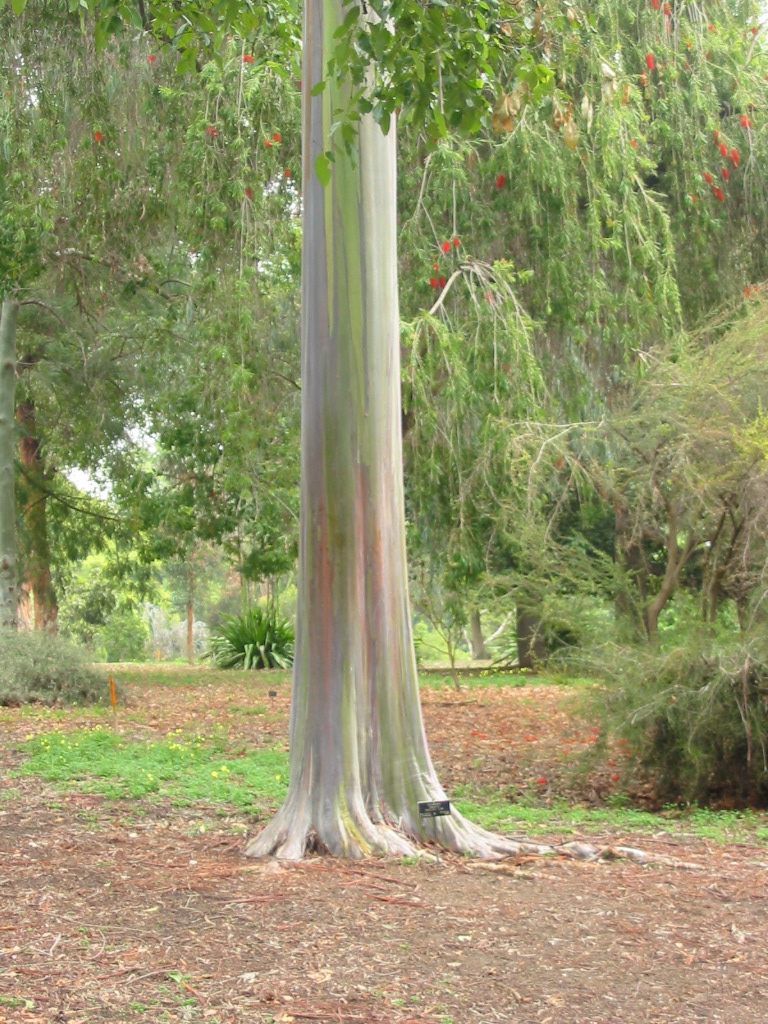
Since most of mom’s poems were undated and written on fragments of paper, it is impossible to place them into an exact time frame. Collectively, however, they provide an inspiring view of the spirit of a remarkable person who, in the midst of keeping step with the events of her time, moving from house to house and city to city, and raising nine children, found a way to create, over the years, maybe one day between kitchen chores or one evening after the children were asleep, “a momentary stay against confusion.” In putting down her thoughts neatly into words and rhymes and sentences and lines, mom ordered her world. She found in that order reflections of the love and beauty and peace and purpose that already existed deep within her, and all around her, from her days as a child on the prairie in Minnesota in the early 1900s to her very last days in California in 1997, where, alongside a rose garden, beneath a towering eucalyptus grove, amidst the vast and beautiful and fertile fields and orchards of California’s Central Valley, in the shadows of the spectacular High Sierras—where giant Sequoias really do “dance with the wind” whenever they please—mom passed into her Eternal Spring, returned to the Source of All Beauty.


Friday, October 27, 2006

Dreams of a Blind Man


I strayed away one summer day
from the land of bustle and noise.
My thoughts?
They wandered far away to play

with their dreamy toys.
The shore was cool, but the sun was bright;
I felt the day and thought not of night.
My dreams! How they sparkled in rainbow hues,
And brightly danced in grays and blues.
And colors sublime? I saw them, too.
I know ‘twas so.
But now…now …Where did they go?
‘Tis dark! ‘Tis dark again at night,
The dark without a ray of light.
The green of the trees, the blue of the skies,
Have gone with my dreams.
To Paradise?
Ah, Yes! I’m sure! I’m sure ‘tis so!
And now I pray through everyday
that I again to them may sometime go.
(1922)


Here mom shows her knack for escaping into her rich imagination and enjoying, at least for a moment, its “rainbow hues” and brightly dancing “colors sublime.” She is the dreamer, the “blind man,” speaking in the masculine voice, and I can’t help thinking that, though she never stops or stopped believing in her dreams, there were moments of melancholy, moments she kept to herself, when she wondered, “Where did they go?” In those moments, her faith kicks in and she realizes that all dreams end in “Paradise.”

This is not only a sample of her early sophisticated poetic skills (she was 17 in 1922) but it is a profound statement of her faith. WWI had been over only a few years. A wave of cynicism had been sweeping the country and the world because of the vast devastation in lives and the disillusionment in institutions. The Roaring ‘20s were just beginning as an escape from the war. Mom shows her deep sense of optimism here, of coming out of the dark and, eventually, into the light of paradise. In literary circles, there is a tradition of blind poets (for example, Homer and Milton) who are inspired by their suffering and who also espouse the sanctity of nature. Mom alludes to that here, at least unconsciously, indicating she had studied or been aware of this tradition. After WWI, there was a general sense of tragedy lingering in the consciousness of people, but poets often asserted the idea, as mom does here, that even within tragedy the life that is nature (and super-nature, i.e., “Paradise”) will reassert itself. As a foot note: In 1990 my sister Julie’s daughter, Jennifer, was studying Helen Keller. Jen memorized this poem and recited it for her class.

I remember when we first took mom to St. Agnes Hospital in Fresno after her first major stroke. It was sometime in the early 1990’s, I think, about 80 years after this poem was written. She began hallucinating in her room because of her medication. She told me to “get the spiders” off the wall across from her bed and to “turn the water off’ on the faucets which were also on the wall. At first I was frightened and tried to reason with her, bring her back to reality, then I realized that for her, she was in her own reality. To her, the spiders and running water really existed! So I entered into her world, her “belief system,” went over to the wall and pretended to wipe off the spiders with some Kleenex and turn off the water faucets. She felt better then, even smiled. I didn’t feel like a professional entering the mind of a patient, which is a technique I teach to students, but like a child believing with his mom that this is what’s going on, this is reality, this is the way things are. I was prepared, conditioned all my life for this moment!

Throughout her life, mom maintained her sanity by moving in and out of her imagination at will, crossing back and forth between the actual and the imagined as if they both exited on one plane. Working about the kitchen or the living room, she talked incessantly to herself. She lived in overlapping realities. This poem is an early indication of the deep structure of her faith and her imagination. She was healthy that way, though most of us could only follow her for a little while into the rich and colorful world of her dreams and visions and imaginations. Most of us did not have that deep spiritual infrastructure. Maybe we were more spiritually “frail,” which is why we so idealized her and regarded her as a “saint.” In our experience, she was one, though we hardly understood how deep her spirituality really was. Few of us could truly follow her there though we are grateful to have her as our model of strength and character.

Wednesday, October 25, 2006

My Dream House

It isn’t, of course, and it shan’t be,
For years and years where passing eyes might see.
Yet deep in the depths of will be, must be,
Already it stands complete—
Pine trees hiding the drive,
Sheltering the doorway and nooks,
Rugs on the floor—dishes, pictures and books,
A wide fireplace and a winding stair for looks.
Surely you’ll love it, this Dream House of mine,
And visit it often any season or time,
When drowsy south winds hum prairie tunes,
Or biting north gales tempt fireside runes.
In summer a door open wide—
In winter a lantern outside!
My Dream House, come true!
(1920s)


Technically, this is one of mom’s most complete and perfected poems, I think, each word working well to flow with the next, sketching out the colorful, concrete details of the dream, each line building the theme. The poem was typed with only four small corrections and three phrases added in pencil, which suggests that she had worked on it by hand several times before finally typing it, and then made a couple of changes. This was probably written while she was in college or just afterward, in the early 1920s. It shows her romantic nature and deep sense of home and hearth, of having a warm place where others are welcome, a place with mature “pine trees” hanging over the driveway and the house, with “pictures and books” and a “wide fireplace.”

Mom kept this dream alive throughout her life. She seemed to literally will it onto each home or apartment we moved into—and there were dozens! Each house or apartment was to her, “not just a house, but a home,” (her words, always!) and she made certain that we hung family pictures and set out the books in the bookcases. She was always looking forward to anyone who came to visit. She wanted to share, not just her physical space, but her entire dream of place, the feeling of being “at home.” The phrase “fireside runes” is significant. “Runes” is an old word and it means poems, verses or songs. Only a student of poetry or a literate person would know this word and be capable using it appropriately, as she does here. It conjures up images of people coming in out of the cold, warming up next the fireplace, and sharing stories of the day—maybe as mom remembered her father and brothers doing during the cold winter months on the farm in Minnesota. Since her grandfather was an Irish barroom balladeer, the singing of Irish runes had to be part of the family mindset. Symbolically, she re-enacted this scene every time a visitor came to the house—preparing warm tea or coffee, cookies or cake, and sitting at the coffee table, visiting, attending, listening—and, if we had one and it was winter, near the fireplace with the logs burning! Overall, the poem captures mom’s eternal optimism and hope and the intricate detail of her imaginary world.

The final line is a poignant and sad one for me. In 1989 when I visited mom in her first convalescent home (St. Francis Home) in Orange county, I knew I had to do something to get her out of there and into a real home again. Though it was a nice Catholic home with a large garden and the nuns were friendly, mom had to shuffle her way down the long corridor to the chapel (Bob had done his best to get her into this home). Her feet hurt her immensely by then. When I saw that she had to sleep in a narrow room with a bed four feet from a stranger and her feet hurt her every time she went to eat or to visit the garden, I set out to buy a home through the VA in Fresno. I brought her up within a month or two to live in an apartment wiwth me until we could move into the home.

The home on Fedora Avenue was my final effort to get mom into, if not her Dream Home, a comfortable home for her last years. The move worked, I think, for she loved the grape vines and the pomegranate tree and all the shrubs. We planted pines in the front that did hide the front doorway and the small porch. She’d sit there among the geraniums and watch the neighborhood kids pass by on their way to and from school. All the family came over to help to make the place comfortable for her. Don built a long ramp so she could get out into the back yard easily. Jerry and Bob put some special hand bars in her bathroom, and the girls all helped to get her room and the kitchen organized so it looked homey. And the bookcases—we had several in each room, a large window looking out into the gardenesque back yard where one summer we tried growing corn and peas and beans and carrots and strawberries. The “we” was always me by then, though, for mom was too unsteady to do any gardening. The dog I got from the pound ate the corn (Bob called him Corn Dog!) and most of the vegetables didn’t produce much, though each day we’d check to see how they were doing. Mom put her statue of St Francis in the corner under a tree so she could see it from her window.

We only lived there a few years, mom and I and Cory and Devon, when they came over, but it was “home,” her last in her fading years and one that left her with good memories. When we finally moved her to the very nice Armenian Home in the countryside of east Fresno, she had a spacious room with a bed by a large window. Outside was a lemon grove. There the “bird with the red eyes,” which she said had followed her from the Fedora home, perched on the branches everyday and looked in on her. That was the same bird she saw flying high overhead the afternoon before he died. She stayed in the Armenian Home for about a year before passing away February 24, 1996. The staff there loved her and respected her as very unique and uncomplaining. They missed her when she finally passed away. Though it wasn’t exactly her Dream House, the Armenian Home was ranked as one of the best rest homes in the state and, in the end, it did get her back into the country, which she very much appreciated.

Thursday, October 19, 2006

Little Knife

“I’m a powerful thing,” said the Little Knife.
“How is that?” asked the Oak’s jealous wife.
“While others must sing and dance for their life,
I just cut and cut,” said the Little Knife.
“You silly thing!” sang the tree so tall.
“How could powerful be such a thing so small?
You’re not strong or big like me,
Nor up in the winds and always free.
You can’t wave your arms or bend your knees.
You can’t dance with the wind whenever you please!
What a powerful thing, indeed!” laughed the tall tree’s wife.
“You’ll know when I cut!” warned the Little knife.
So with one sharp blade did he cut and he saw,
‘Til the oak tree’s trunk was as thin as a straw.
Then down came the oak with a dreadful crash,
Her arms and her knees broken in a flash,
And she learned for herself, did the Oak’s jealous wife,
What a powerful thing is the Little Knife.
(1928)

Mom’s skill with words and rhyme and her creative, playful mind are very evident here. This rich imagination allowed her to make fresh connections and associations to ordinary things around her (a knife, a tree) and to make poetry out of her ordinary life. I think this is why she was able, even content and happy, to be so home-bound all her life. She didn’t need outside stimulation to stay interested in living, to stay alive, to keep from getting bored and depressed. She never stagnated because her mind, each day she awoke, worked creatively with the things around her…the pots and pans, the children, the news, the sights and sounds outside, the school and play activities her children brought home and shared with her. She lived totally connected to her world and, through her children, connected to the outside world. She didn’t need a driver’s license and a wardrobe to go places, outside friends and clubs and hobbies to keep her interested. She didn’t want them because she didn’t need them.

Mom was self-contained, caught up with raising children and managing the household in her early years, but still living out a vivid inner life and exclusive family life. Even for the 25 years she lived as a widow after dad’s passing away, she lived with family and through family, experiencing what we experienced, sharing what we shared, enjoying what we enjoyed, struggling with what we struggled with. If we kept distant from her or tried to be independent in any way around her, she tried to respect that, but invariably worked her way into our lives.


For me when I lived with her after my divorce, it was always a balancing act to keep my independence from her and my connection to her. “Do you need a new jacket?” she asked one winter evening, as I was leaving to teach a class. I was 50 then! “How was your day today?” she always asked, for as long as I can remember. She was always listening for the door to open, always there to greet me when I came in. And always suggesting a warm cup of tea or cocoa, even though, by 90, she couldn’t really get all this organized, so I had to warm the water, get out the cups and tea bags and sit down for a visit about my day. She was there, connecting, being part of, organizing her day around a cup of tea and her son coming home. It would be easy to misinterpret this straightforward love and interest as being overly mothering, but one reading of this poem alone reminds us that mom possessed a level of connectedness and insight that far surpassed our own and saw in the little things far beyond what we were able to see.

Tuesday, October 17, 2006

Sunset

Warm downy clouds aglow with light,
Above and beyond green lacy trees,
Ever shading from greys to purplish –pink to white, Announce now the approach of night.
The chirp, chirp of a bird,
And a dark flash ‘gainst the sky,
The crying laughter of children
In the yard nearby,
Herald nighttime’s nigh.
Oh! Warm by your hearth,
Ye tiller of soil.
Gather your fond ones, large and small,
Rich in their blessings at the light of day,
Shaded in peace and mist:
Let them now feel their day.
(1928)

Mom was always connected to her environment, aware of the season’s changes, the phases of the moon, the shifting of the clouds in the sky, the sounds around her….birds, children, people talking… and she always appreciated these all as parts of the larger design, the larger blessing of life. This poem was written in the spring, May 1928.

Sunday, October 15, 2006

The Mystery of Spring

Many, many years ago, in the Land of the Sky Blue Waters,
A tiny seedling began to grow.
For years it grew—a slender stalk, an eager young tree—
inhaling the freshness of spring and the early morning dew,
through many suns, and many moons too,
fresh leaves unfolding each spring, strong limbs baring each fall.
Still, no one knew from a mere glimpse of this tree
What sort of friend it might someday be.

It was one May day in the afternoon, that finally appeared its first bloom—
a delicate pinkish glow.
Day upon day, in ecstasies, raising its heart to its Maker,
Its arms to the dancing blue and its eyes to snow-capped heights,
And toes deep clinging to the prairie soil,
It grew—a radiant Peach Tree—in tender tones singing
The mystery of spring, the beauty of love,
‘Til everyone could know,
The joy of a peach tree aglow.
Though warmed by the sun, day after day,
No fruit did this peach tree show.

So autumn and winter came its way, to strengthen,

to rouse its deep slumber,
Then springtime again, and buds without number,
And summer once more—
With a glimpse of a Pine Tree, stately and somber,
Ever-living, you know—
Its leaves shed again, with arms holding warm flakes,
A tinge deep within, beneath the snow,
Where the roots of the peach tree continued to grow.

In early spring, a deeper and stronger glow,
Did the peach tree show—
A Sanctuary Lamp—
But days and days of clouded sun and breezes damp
Retarded its warmth and arrested its bloom—
Touching the Pine tree, too—
And then, another winter…
Biting and frosting its earliest spring bud…

(1929)
Though this poem is undated, it is written in ink (a different ink) in mom’s note book on a page following a 1929 poem (Little Burgler) and preceding a 1945 poem (Perspective). Since its setting is Minnesota (“Land of the Sky Blue Waters”) and it refers to the “prairie soil” and a severe winter, “biting and frosting the earliest bud,” I suspect this was written while she was still in Minnesota, probably 1929. The poem is incomplete, ending abruptly and having only a few corrections on the original, but its theme is unmistakably one of mom’s favorite: the close attention and reverence for nature, for the seasons, for weather, for warm sunshine and biting winters, and for how all this reflects God’s power and is, in fact, a tribute to His Majesty (“The Maker”). It reflects mom’s strong connection to the land (having grown up on a prairie farm) and her religious faith, both of which are intertwined and central to her identity, to how she defines herself and the world around her. Her technique of using physical descriptions of nature as objective correlatives for spiritual reflection is a technique used by professional poets, including Robert Frost, a poet of New England, whom I’m sure she studied.

Another theme that reflects mom’s deep sense of awe and acceptance of struggle is the fact that the Peach Tree never really bears fruit, is thwarted from realizing its true potential by the severity (and the sheer arbitrariness!) of the weather: “another winter biting and frosting its earliest springtime bud”…days and days of clouded sun and breezes damp retarded its warmth and arrested its bloom.” This is the realism of someone who understands the harsh nature of life, who as the daughter of a farmer, has seen her father and mother worry (and suffer?) over many winters and springs and disappointing harvests. Though the poem begins with optimism and a romantic view of the tree, even personifying it (“What sort of friend it might someday be”), it progresses through a series of disappointments and ends abruptly in defeat, the bud succumbing again to “another winter biting and frosting.”

All of us know and love mom for her inner strength, love, goodness and compassion. This fragment reveals that long before she ever married dad, had nine children and was forced to constantly struggle to make ends meet and to move from place to place, she forged her character and sense of life’s harshness during the cold winters with her brothers and sisters on the farm in Heron Lake. Hers was a deep faith and devotion forged through struggle. She did not deny or distort reality, but understood and embraced it for what it was: seasonal, mysterious, sometimes bitter, always hopeful. For her, it was always possible that “next spring the Peach Tree might bloom!” I will never forget that look of strength, acceptance and calm on her face as we all greeted her at the airport when she returned from Minnesota after dad’s sudden death. She had felt it before—“winter biting and frosting spring’s earliest bud…”

Saturday, October 14, 2006

Life Everywhere

Mother Dear—
And it’s spring again,
New life budding everywhere—
In the treetops, and the bushes at the curb,
Down the street—
A peony sprouting under the ivy,
And a rose peeping up through our pansy bed,
And a downy-white cherry tree glorifying
The “Guest Room,”
Awaiting that precious life to bloom when the cherries ripen—
There’s awakening this spring,
Both inside and out!

(May 1931)

This poem was clearly written in Beverly, MA, while mom was pregnant with Mary, who was born just two months later on July 1, 1931. This is truly a beautiful expression of mom’s devotion to Mary, the mother of Jesus (“Mother Dear”), after whom she named her first child, and of her deep sense of being a part of nature, of the creative process. She and the trees and flowers around her are one! This poem brings the essence of her personality together better than any other of her poems, I think. In 65 words, she has interwoven the major themes of her life: love of God, Love of Mary, love of family, love of nature, love of home, and love of her role as mother and as homemaker. This is the beauty of the poetic mind—to condense so much meaning into so few words.

I can only imagine how excited she must have been, how respectful she was of this gift awakening inside of her, her first child, paralleling the awakening of the life outside—the trees, peonies, roses, cherry blossoms, even the ivy and the “bushes at the curb!” She was so connected to the life around her, so much a part of it, so aware of the details around her. And the idea that she called the baby’s room, which she and dad must have gotten all ready for Mary, the “Guest Room,” conveys her deep sense of being honored to be a caretaker, a host, not to her own children, but to God’s children given to her to love and to nurture along until they too, like the trees and flowers outside her window, can stand on their own as part of God glorious creation.

Friday, October 13, 2006

I Found My Horse

I found my horse with its back to the street,
Neat and quite discreet.
One eye winking toward the sea,
There it sheltered me.
High on my perch in the old birch tree,
I can watch the summer-folk stroll along,
And sleep with the pounding surf-cliff song.
Oh, Sea! Lick your sand endlessly!
Lash at the rocks with foam!
Landlocked dry on the cliff am I,
Where the gas lamp glows on my step ‘til morn,
I’ve found my haven from stress and storm.
(1930s)


This sounds like it was written during the time the family lived on the rocky North Shore of Boston, just blocks from the ocean, or farther in town in Somerville. The nature images here are central to mom’s thinking and the theme of finding a haven from stress is a key to her personality, her ability to take things in stride, to find calm and stay steady in the midst of crisis and chaos and uncertainty. The horse, birch tree and cliff are all sheltering, intertwined concrete images symbolizing her “haven from stress,” the actual abstract emotion she is feeling. They are also images and memries from her childhood on the farm on the Minnesota prarie. This use of imagery and repetition shows a fairly sophisticated, conscious sense of poetic style and technique. It is not just a casual blurting down of words and ideas. She is “landlocked dry on the cliff…where the gas lamp glows on my step til morn.” Could this be the house on the hill the family moved into in 1936 in Somerville that overlooked parts of Boston, or the second- and third-floor home they moved into in 1940 to be closer to St. Catherine’s Catholic school? While there is no sure way to accurately identify the source and inspiration and meaning of the imagery of this poem (or most of mom’s poems), the poem stands on its own as a coherent piece of poetic sentiment. Mom’s imagination could easily turn a bedroom window high on a hill into a “cliff” or a “perch in an old birch tree.” Her love of the sea, of its power and majesty, is clearly captured here in words, as she personifies it, makes it a living companion: "Oh, Sea! Lick your sand endlessly! Lash at the rocks with foam!" This sense of the wonder and awe of nature, this deep appreciation of and closeness to it, was an essential and daily part of mom's life, even to her very last day as she marveled at the roses all around her and the eucalyptus branches waving high above against a backdrop of deep blue sky. To her very last moments, she was totally attuned to, connected to, resonating with the natural world around her.